
Pet insurance for Staffordshire Bull Terriers
Start with this dog’s identity and medical history, then inspect inherited-condition wording. A breed label alone cannot tell you what an insurer will pay.
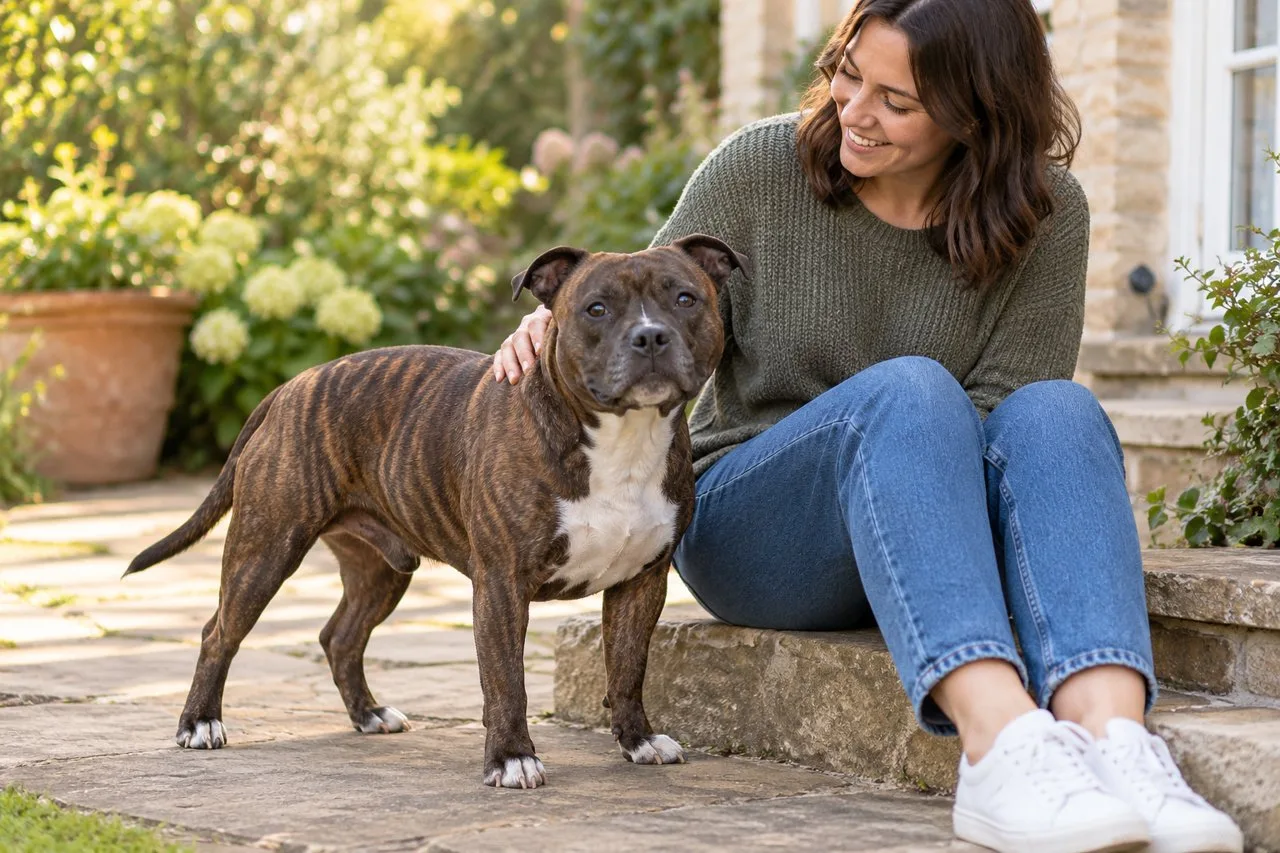
Get the breed entry right
Use Staffordshire Bull Terrier when that is the documented breed. Do not select American Staffordshire Terrier or American Bulldog as a convenient substitute in a drop-down. If the insurer’s choices do not match the veterinary or adoption record, ask it to record the breed correctly before saving the offer.
This is a quote-accuracy check, not a claim that all insurers classify these dogs identically. Save the breed entry with the age, home address and selected benefits so you can reproduce the offer. For a mixed-breed dog or an uncertain history, disclose the uncertainty rather than assigning a pedigree from appearance.
One useful breed-specific test of the policy
UC Davis identifies juvenile hereditary cataracts as an inherited disorder found in Staffordshire Bull Terriers. Its laboratory guidance also cautions that a result clear of the tested mutation does not rule out cataracts from other genetic or environmental causes. That makes the distinction between a DNA result and the dog’s clinical eye history important.
The veterinary question
What does the test establish, and what do the examination findings mean for this dog? Ask the veterinarian to interpret the result and any eye concerns.
The insurance question
How does this policy treat inherited eye disease, genetic screening and any signs already recorded? Ask the insurer to point to the relevant clauses; a laboratory report is not an insurance approval.
Do not assume that a healthy-looking dog, a negative result for one mutation or a breeder’s health assurance removes every hereditary exclusion. Equally, do not conclude that every Staffordshire Bull Terrier has an eye disorder. The evidence supports a targeted document check, not an incidence estimate or diagnosis.
Read inherited-condition cover in three layers
| Layer | What to inspect | Why it matters |
|---|---|---|
| Included benefit | Does accident-and-illness coverage include hereditary and congenital conditions, or require an endorsement? | An illness benefit can still contain a narrower inherited-condition exclusion. |
| History boundary | How are prior signs, advice, tests and treatment assessed against the start date and waiting periods? | An included category does not override an individual pre-existing-condition exclusion. |
| Paid services | Are specialist consultations, diagnostic tests, prescriptions and follow-up services eligible, with what limits? | A condition can qualify while particular charges remain your responsibility. |
Current official materials illustrate why these layers belong together. AKC Pet Insurance markets a separate hereditary and congenital coverage option. Neither description establishes eligibility for your Staffy without the offered state policy and medical history.
Compare the same dog and the same protection
Breed, age, location and chosen coverage can influence the premium. Obtain actual quotes using one consistent profile; no national dog average or other breed’s price is a substitute for this dog’s offer.
- Keep the accident-and-illness scope and hereditary option consistent before comparing prices.
- Match deductible structure, reimbursement setting and benefit limit where possible; record any differences rather than hiding them.
- Decide whether examination fees and ongoing medicines belong in the comparison, and price the required options.
- Ask how renewal and continued care are handled if an eligible condition requires treatment in a later policy term.
The best pet insurance for a Staffordshire Bull Terrier is a conditional choice: the available policy must fit the dog’s actual history and leave an affordable share of the bills. A larger advertised limit is not useful for a condition that the contract excludes.
Take a small, accurate file to the insurer
- Bring the veterinary breed record and any adoption or breeder health documents you already have.
- Keep laboratory results separate from clinical diagnoses; include the full report rather than a “clear” label alone.
- List any prior eye concerns and other symptoms accurately, including unresolved investigations.
- Ask for the offered policy, selected endorsements and an explanation of any exclusion before treating a quote as usable protection.
Keep veterinary decisions with your veterinarian. Do not delay an examination or alter an accurate record in an effort to change insurance eligibility.
Sources and policy context
Public consumer and veterinary references support the context. Named product features were checked against official insurer materials; the policy offered for your pet and state determines benefits.
Compare Current Pet Insurance Rates
Check current options for your pet and location, then compare the policy details, exclusions, costs, and eligibility before choosing.